Popping and stickbaits for tuna: when and how
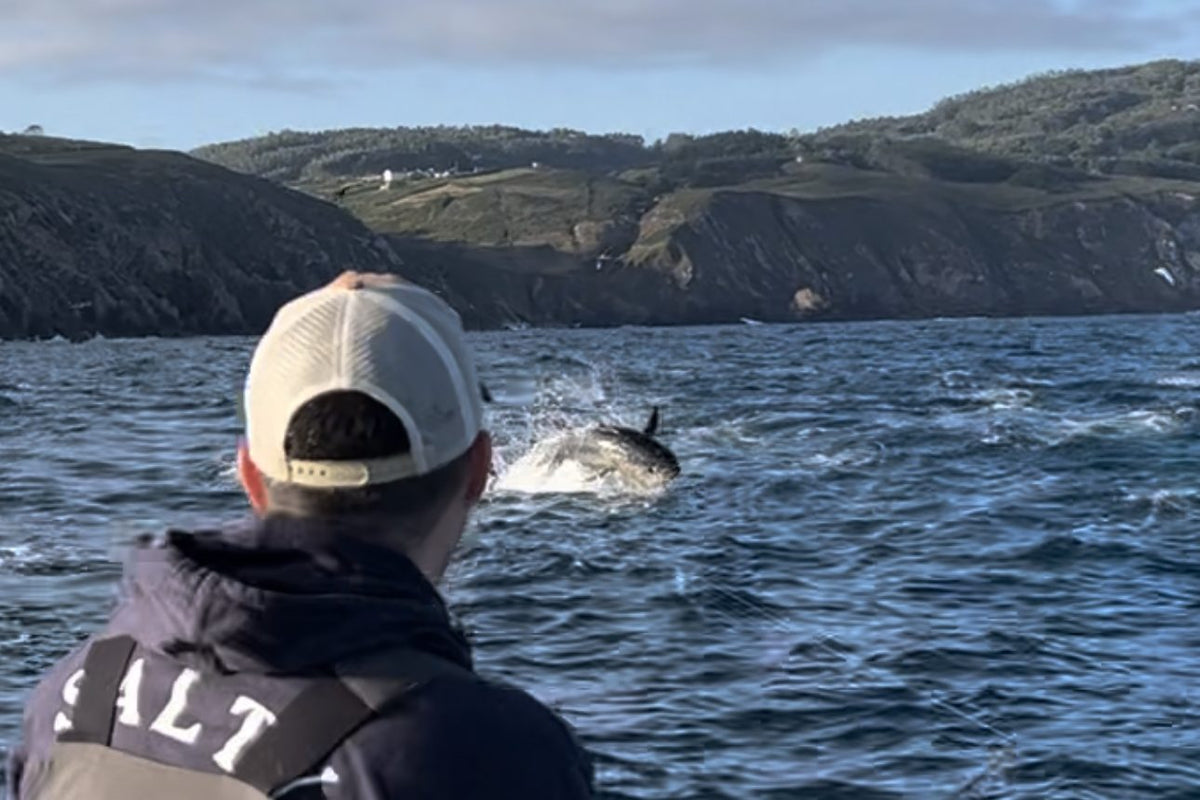
Heavy spinning with a popper or a stickbait is the most demanding and most visual way to fish tuna. It does not work every day: you need active fish on the surface and gear that is ready. But when it happens, nothing compares.
When
- Surface feeding: diving birds, broken water, jumping fish. That is the signal. Without it, trolling produces more.
- First and last light, with calm or moderate seas. In strong wind the lure does not work and the boat cannot get into position.
- Current lines and drop-offs, where food concentrates.
Popper or stickbait
The popper makes noise and throws water: it calls fish from afar and is ideal when the frenzy is active but scattered. The stickbait glides under the surface with an S-shaped swim and less commotion: it is the choice when fish are selective, under heavy pressure or the sea is flat calm. Keep both rigged; often the one that fails at seven works at eight.
Casting and retrieving
- Cast ahead of the school, in the direction it is moving, not on top of it: a lure landing on the fish sinks them.
- With the popper, sharp rod pulls with a pause between each; many strikes come on the pause.
- With the stickbait, long unhurried sweeps, letting the lure glide. Less is more.
- On the strike, set with the reel, not a rod jerk, and keep the line tight.
Indicative gear
- Spinning rod of 2.3 to 2.5 m, heavy power (PE 6 to 10 depending on fish size).
- Large reel with a powerful, smooth drag able to take long runs.
- PE 6 to 10 braid and a 100 to 170 lb fluorocarbon or nylon leader, two to three metres, with a reliable knot that passes through the guides.
- Lures with single inline hooks: they hook well, release better and are safer on board. The FAO Technical Guidelines for Recreational Fisheries (2012) note that barbless hooks shorten unhooking and reduce damage to the fish.
Safety
A big tuna on spinning gear is fought standing and with the drag near its limit. Gloves, drag set before casting, care with line around hands and feet, and never hand-fight a fish you cannot stop: better to lose a lure than a finger. If you plan to release the fish, prepare the manoeuvre before it reaches the boat: we explain it in bluefin tuna catch and release.