Birds, bait balls and the thermocline: how to find tuna before you see them
You rarely see tuna before they strike. What you can see is what they cause: diving birds, boiling water, a mark on the sounder. This guide brings together the signs that lead to them, from the surface down, and what to do with each one.

1. Birds: the cheapest radar
Tuna drive small fish up to the surface and put them within reach of seabirds. That is why birds have always been the sign to look for, and some tropical seabirds depend on tuna schools to be able to feed at all (Veit and Harrison, 2017).
- Birds sitting on the water: there has been activity and it may come back. Worth staying close.
- Birds circling high: they are following something that hasn't come up yet.
- Birds diving (gannets, shearwaters): the bait is up and predators are pushing it. This is the moment.
- Gulls on their own behind a fishing boat: that's not tuna, it's discards.
Good binoculars make the difference: a flock shows up miles away, long before anything appears on the sounder.
2. The bait ball
Sardine, anchovy, mackerel or scad pack into tight balls to defend themselves, and predators close them in from the sides and from below. On the surface it looks like boiling water, short splashes or a darker patch. On the sounder it shows as a dense cloud, often with a hole in the middle or arches around the edges: those are the predators at work. How to tell each mark apart is in the guide to tuna on the fish finder.
There can be tuna without a bait ball, but an area with plenty of bait and birds is where it pays most to keep working.
3. The mixed layer and the thermocline
In summer the sun warms the top few metres of the sea and the wind mixes them: a layer of warm, even water forms on top of colder water. The boundary between the two, where the temperature drops quickly, is the thermocline. Bait tends to gather above it or in it, and tuna cross it to feed and to regulate their body temperature.
Electronic tagging studies back this up. In the Mediterranean, with the sea stratified in summer, bluefin tuna spent 80 to 90% of daytime in the top 20 metres, and that share drops in October, when the sea cools and the thermocline breaks down (Bauer et al., 2020). On the Balearic spawning grounds they stay very close to the surface, while in the Strait of Gibraltar they swim deeper (Aranda et al., 2013), and there are U-shaped dives down to 300 metres interpreted as feeding (Cermeño et al., 2015).
What it means on board:
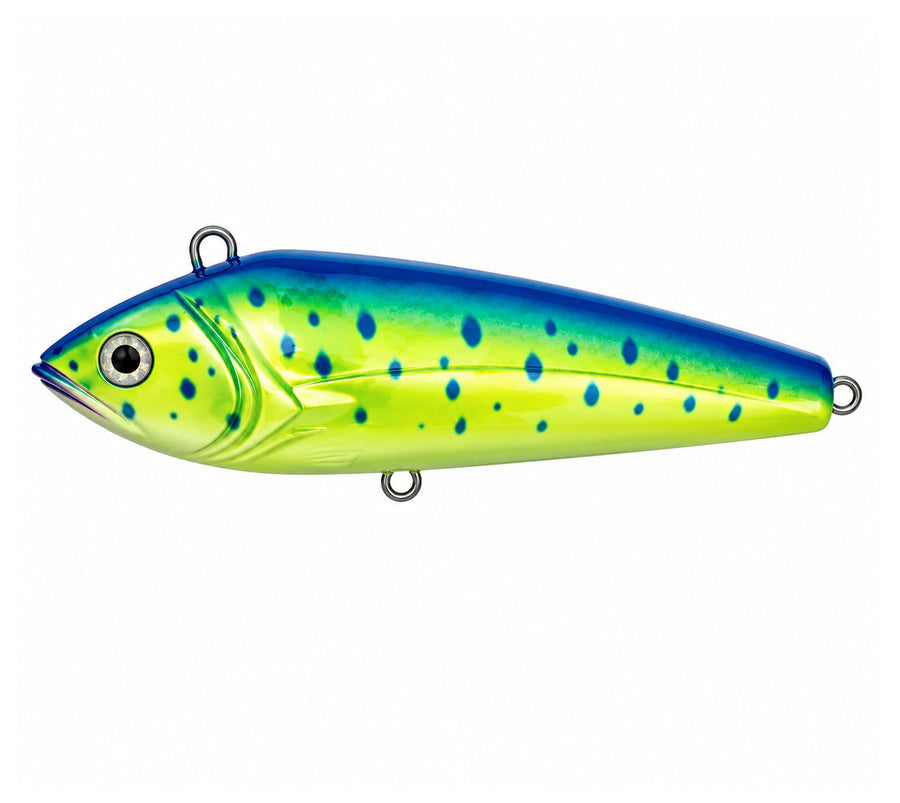
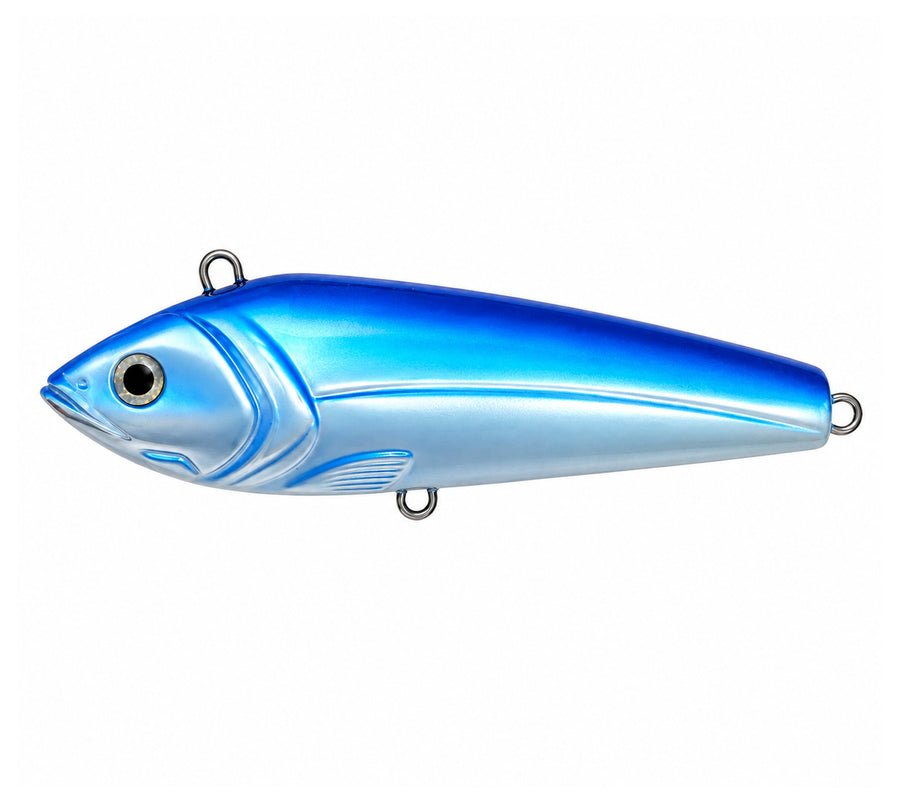
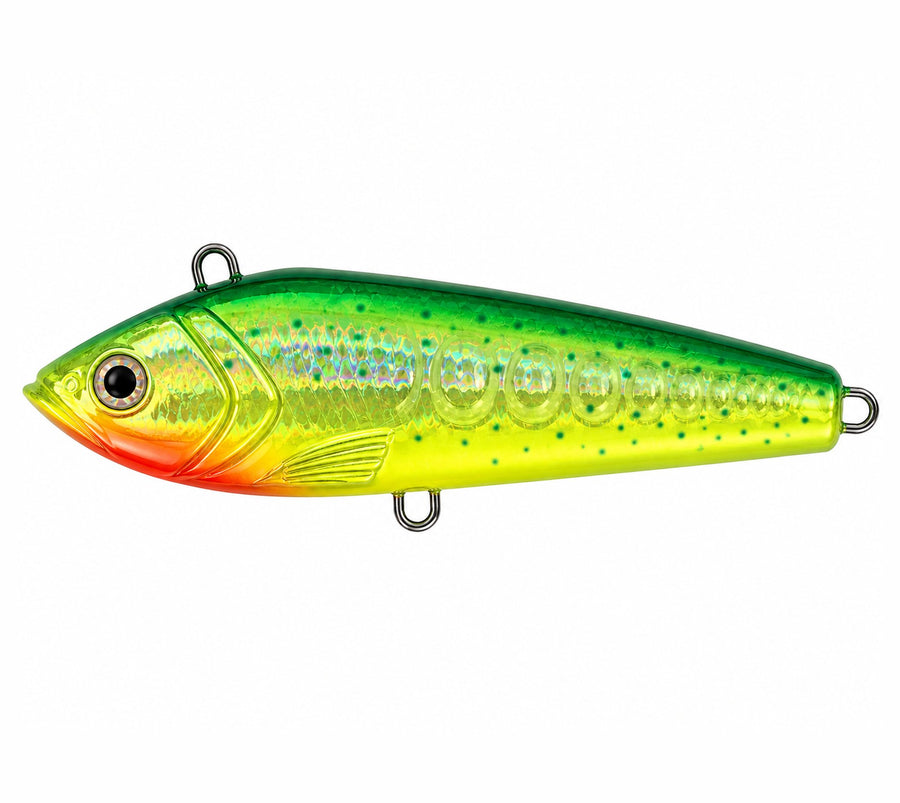
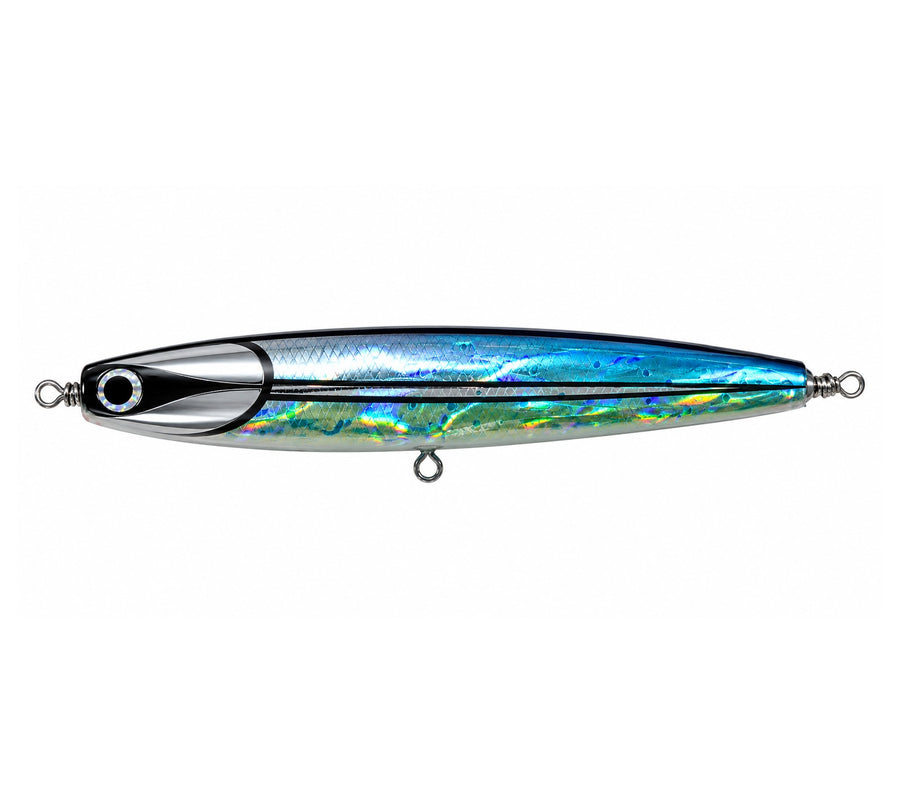
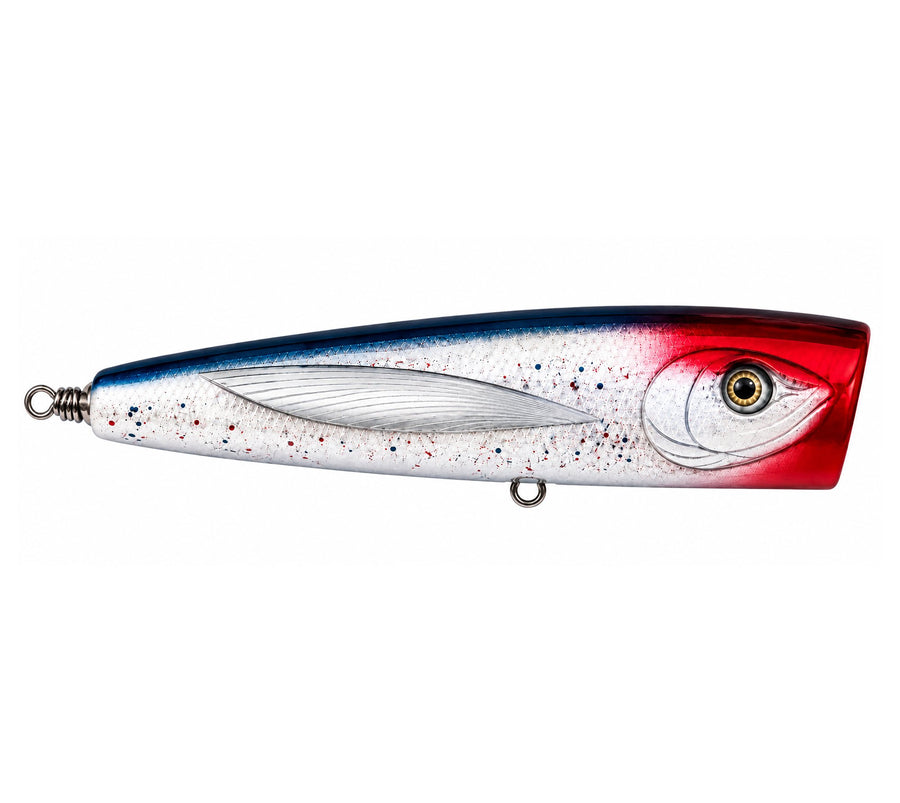
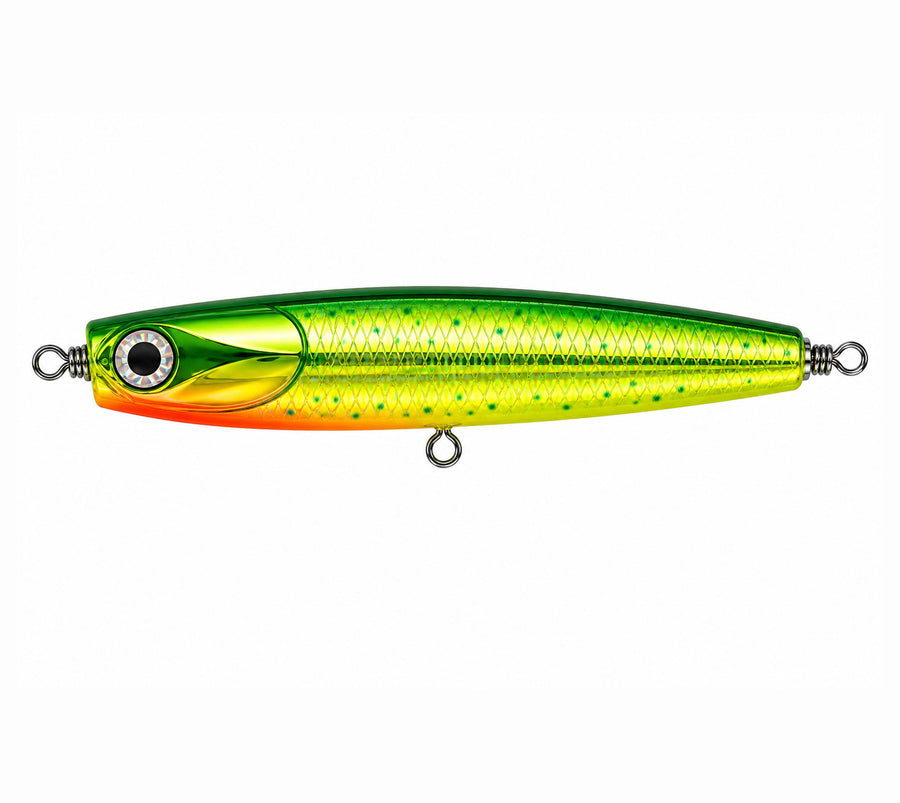
- In high summer, feeding tuna are almost always in the top layer: it's the season for popping and stickbaits and for surface trolling.
- When the sea cools, or in strong-current waters like the Strait, fish may sit deeper and come up less: you have to find them on the sounder before you see them.
- Many sounders draw the thermocline as a faint horizontal band in mid-water. If the bait is tight to it, tuna will be nearby.
4. Temperature, currents and fronts
Where two bodies of water meet, the temperature or colour changes, or a line of foam and debris forms, plankton builds up; bait follows, and predators follow the bait. Signs worth looking for:
- A jump of one or two degrees on the sounder's thermometer over a short distance.
- Lines of foam, weed or floating debris: they mark the edge between currents.
- Changes in water colour, from green to blue.
- Banks, drop-offs and canyons that push the current up and concentrate the bait.
Which months tuna pass through each area is covered in the guide to migration routes and calendar.
5. How to approach without spooking them
- Don't drive over the feed. Run along the edge, with wind and current in your favour, and let the spread cross the active zone. An engine on top of the school sends it down.
- Throttle back before you get there, not when you arrive: a sudden change in revs carries under water.
- When trolling, spread speed and distances are in the trolling guide. If fish are up and feeding, casting a popper or stickbait usually works better.
- If the school goes down, wait. It often comes back up a few hundred metres further on, in the direction it was heading.
The search order, in short
- Binoculars: birds and broken water.
- Thermometer and colour: fronts and water changes.
- Sounder: bait, thermocline and marks around it.
- Approach along the edge, with the spread crossing the action.
And if a tuna comes on, make the release a good one: bluefin tuna catch and release.
Sources
- Bauer, R. K. et al. (2020). Surfacing and vertical behaviour of Atlantic bluefin tuna (Thunnus thynnus) in the Mediterranean Sea: implications for aerial surveys. ICES Journal of Marine Science, 77(5).
- Cermeño, P. et al. (2015). Electronic tagging of Atlantic bluefin tuna (Thunnus thynnus, L.) reveals habitat use and behaviors in the Mediterranean Sea. PLOS ONE, 10(2).
- Aranda, G. et al. (2013). Spawning behaviour and post-spawning migration patterns of Atlantic bluefin tuna (Thunnus thynnus) ascertained from satellite archival tags. PLOS ONE, 8(10).
- Veit, R. R. y Harrison, N. M. (2017). Positive interactions among foraging seabirds, marine mammals and fishes and implications for their conservation. Frontiers in Ecology and Evolution, 5.